
Overview
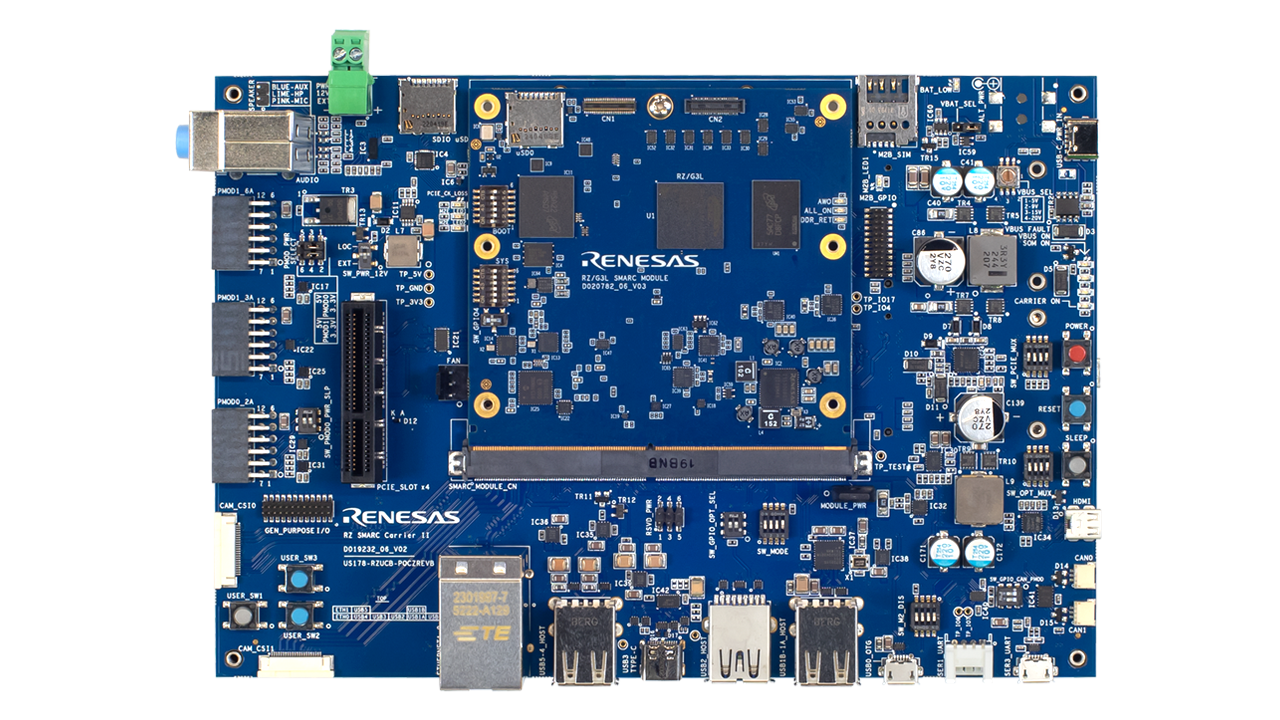
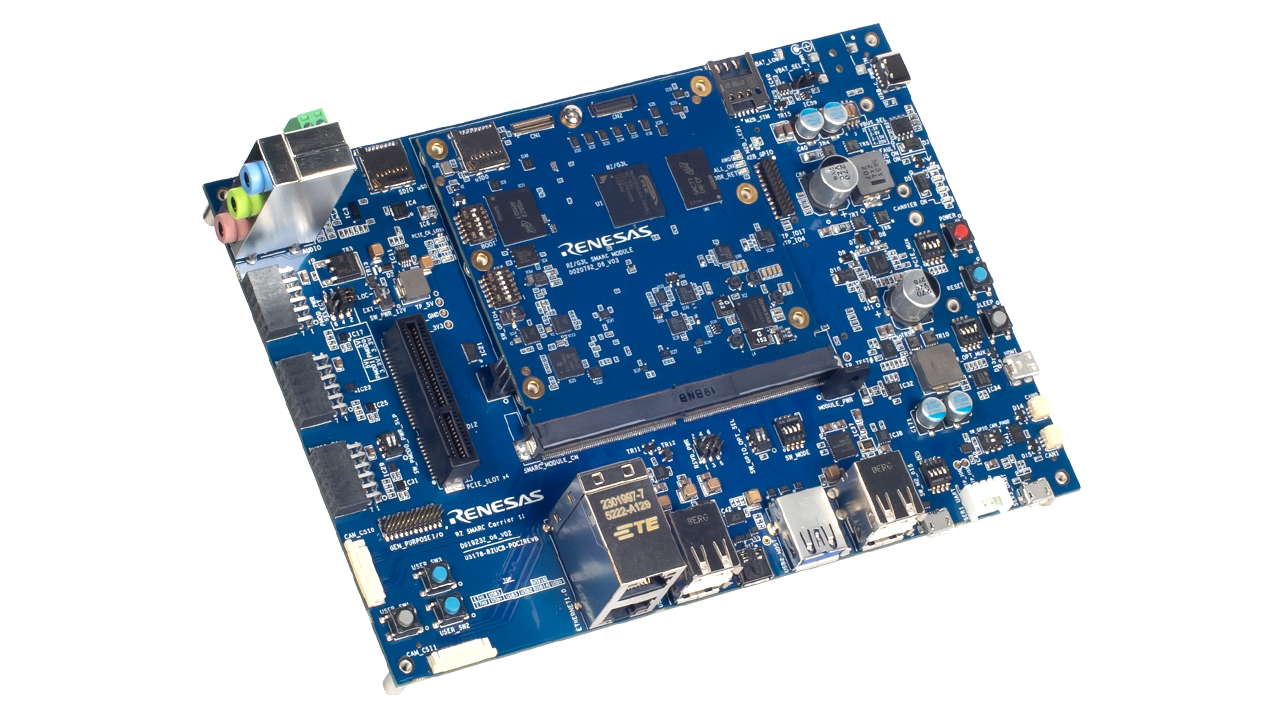
The RZ/G3L Evaluation Board Kit is designed for users to evaluate the features and performance of the RZ/G3L and RZ/G3SE MPUs. This is a ready-to-use development platform for entry-class HMI and IoT edge applications. Download curated software packages that seamlessly work with this evaluation board kit.
For more details, refer to the RZ/G3L SMARC Module Board Manual and RZ SMARC Series Carrier Board Manual.
Features
- Device: RZ/G3L R9A08G046L46GBG
- Cortex®-A55 x4, Cortex-M33 Single
- LFBGA 400-pin, 14mmSq body, 0.5mm pitch
- SMARC Module Board
- LPDDR4 SDRAM: 2GB × 1
- QSPI flash memory: 16MB × 1
- eMMC memory: 64GB × 1
- PMIC power supply RAA215300#HAA implemented
- microSD card slot x2
- Micro HDMI, over parallel interface
- I3C connector
- JTAG connector
- ADC x8 channels
- PDM MEMS microphone
- Current monitor (USB Micro-B)
- Carrier Board
- Gigabit Ethernet x2
- USB2.0 x2ch (OTG x1, Host x2 (via USB hub))
- CAN-FD interface x2
- MIPI CSI-2 camera interface
- Micro HDMI, over MIPI-DSI/LVDS interface x1
- microSD card slot
- Mono speaker interface, stereo headphone, mic. and aux. interfaces
- Digilent Pmod™ x3 (Type-2A, Type-3A, Type-6A)
- PCIe Gen2 4-lane slot (RZ/G3L supports only 1-lane)
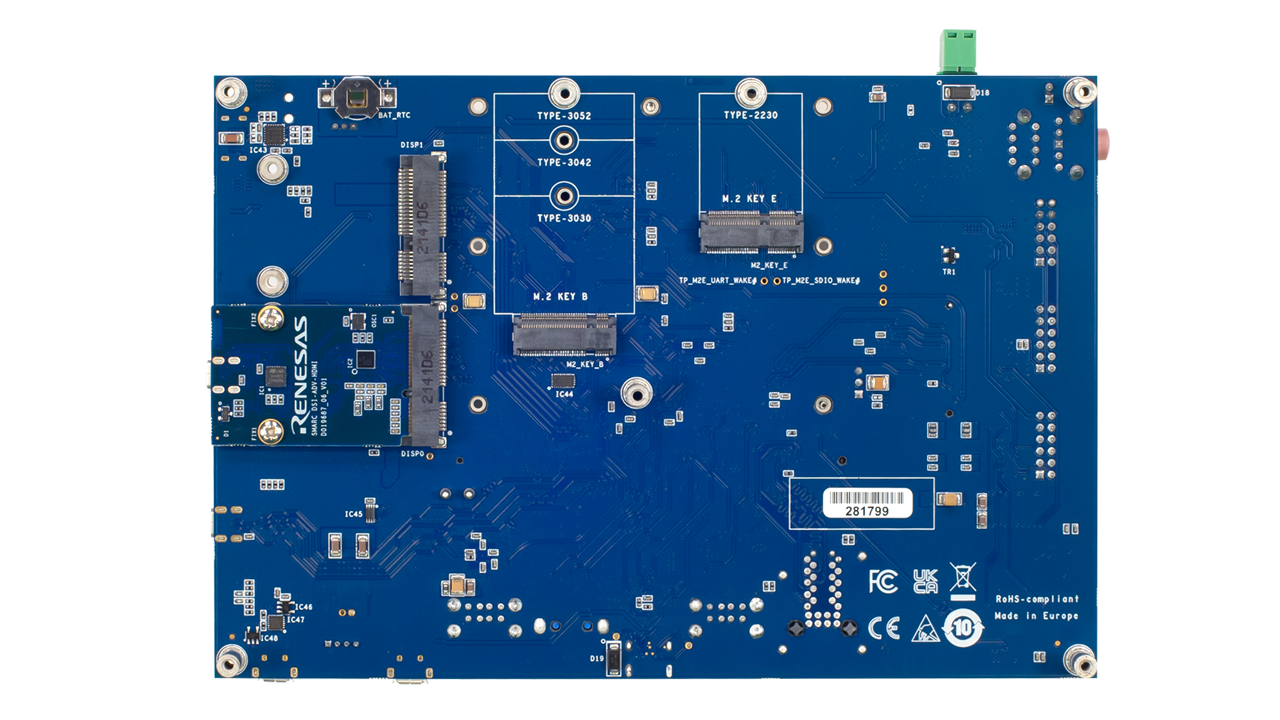
- M.2 Key E interface
- M.2 Key B interface and SIM card slot
- Module supply current monitor
- Coin cell battery holder
- USB Type-C power input
Products in the Design
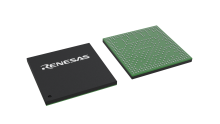
| RAA215300 | High-Performance 9-Channel PMIC Supporting DDR Memory, with Built-In Charger and RTC |
Box Contents
- RZ/G3L module board (SMARC2.1.1)
- Common carrier board II (for RZ/G3L, RZ/G3S, and RZ/G3E)
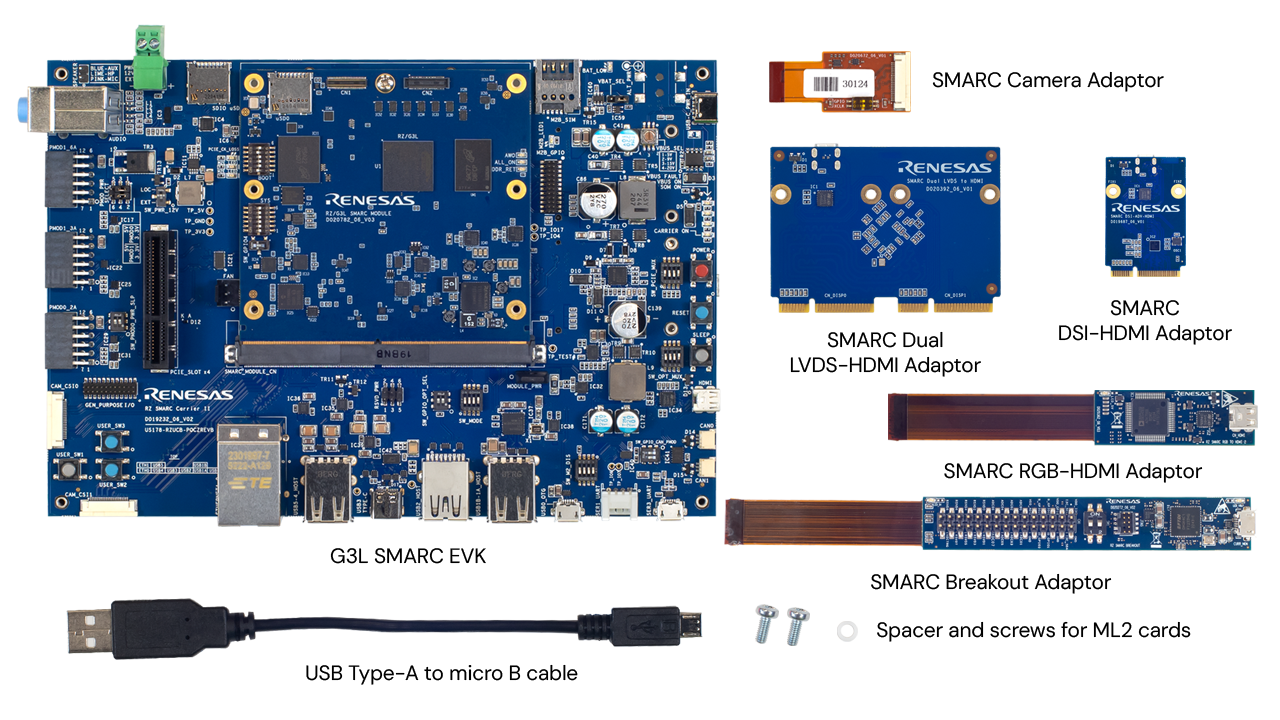
- Various adapter boards, cables, screws, etc.
Not Included
- 65W USB Type-C charger and USB Type-C to Type-C cable
- USB Power Delivery (PD)
- Output: 5V3A, 9V3A,15V3A, 20V3.25A
- microSD UHI-Class 10 8GB or more
Sample & Buy
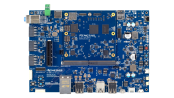
RTK9846L46S01000BE
ActiveVideos & Training
The RZ/G3L and RZ/G3SE multi-core MPUs combine ultra-low standby power consumption of down to 1mW with full pin compatibility, enabling scalable designs that support extended battery-powered operation.
Using a common hardware footprint and shared development environment, developers can efficiently migrate between devices and scale applications from feature-rich HMI panels to intelligent IoT edge systems while reducing development effort and accelerating time to market.
Additional Videos
News & Blog Posts
Support

Support Communities

