The widespread use of robots has led to increasing demand for smaller and lighter robot controllers and servo drives, making it a major challenge to achieve both high system performance and compact size.
Collaborative robots (cobots) and small industrial robots that work alongside humans have become increasingly common, resulting in a growing demand for smaller and lighter robot controllers and servo drives. However, this presents major challenges in balancing high system performance with compact design.
Industrial robots require not only high-speed and highly precise synchronized control of multiple axes, but also industrial Ethernet connectivity to higher-level controllers and compliance with functional safety standards. To meet these demands, conventional systems are typically configured to combine multiple devices, including a high-performance processor (MPU) for motion control, microcontrollers (MCUs) for motor control assigned to each axis, and communication ASICs for connecting to external devices.
Adding devices to implement these functions increases the board area, making miniaturization difficult. For collaborative robots in particular, making the control circuitry more compact is essential.
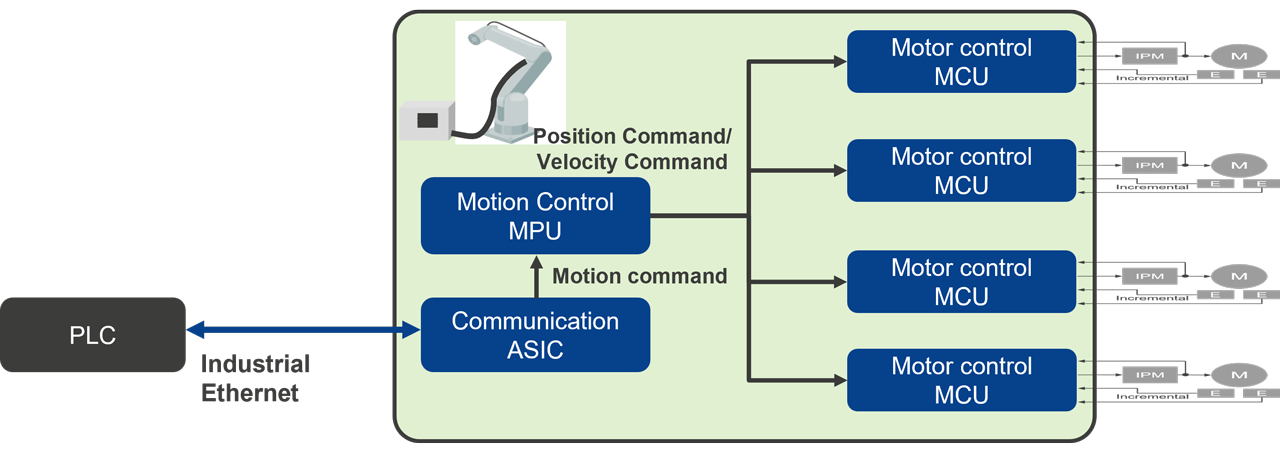
Figure 1. Conventional Robot Block Diagram
Bringing Robot Control Together on a Single Chip
Robot control requires simultaneous execution of position, velocity, and torque control. To support these functions, the RZ/T2N MPU integrates two Arm® Cortex®-A55 CPU cores, which offer high-performance application processing, and two Arm Cortex-R52 CPU cores, which deliver high deterministic real-time performance.
The Arm Cortex-A55 cores handle Linux-based application processing and network processing, while the Arm Cortex-R52 cores handle time-critical real-time tasks, such as motor control and functional safety. By assigning each workload to the optimal CPU core, it is possible to achieve both high-performance application processing and high-precision real-time control.
In addition to tightly coupled memory (TCM), which is directly connected to the CPU for high-speed access, the RZ/T2N also features a DDR interface for connecting high-capacity DDR memory. This allows memory to be utilized according to the needs of each workload. Large programs, such as Linux applications, can be placed in DDR memory, while programs requiring highly deterministic real-time performance, such as motor control and functional safety software, can be placed in TCM.
By combining these features, which were previously distributed across multiple devices, the RZ/T2N integrates application processing, real-time control, and network processing into a simpler single-chip architecture.
Four-Axis Motor Control and Industrial Ethernet for Multi-Axis Synchronization
The RZ/T2N integrates the peripheral functions necessary to control up to four motor axes. These include a timer function that generates PWM outputs for four axes, a delta-sigma interface for current detection, and an encoder interface for position and speed detection.
The encoder interface features two channels per axis and supports multiple protocols, including A-format, BiSS®-C, BiSS-Line, EnDat® 2.2, EnDat 3.0, and HIPERFACE® DSL. Since different protocols can be used on each channel, this expands the range of available motors and encoders, providing flexible support for a wide variety of robot configurations.
Furthermore, in advanced industrial equipment, highly reliable and high-precision industrial Ethernet connections between devices are essential. The use of industrial Ethernet is becoming increasingly widespread to synchronize motors and I/O within robots at high speed and with high precision.
The RZ/T2N is equipped with an Ethernet subsystem that features five Ethernet ports and supports major industrial Ethernet protocols, such as EtherCAT®, PROFINET® RT/IRT, EtherNet/IP™, and OPC UA®. It also provides hardware support for time-sensitive networks (TSN), enabling a distributed synchronous control system in which network-connected devices operate in coordination.
Meeting Growing Functional Safety Requirements
In industrial robots, functional safety is as critical as control performance and production efficiency to protect people and equipment. As robot systems become more autonomous and their applications expand, safety-related functions, such as fault detection and safe stops, require ever-higher levels of reliability.
The Cortex-R52 core integrated into the RZ/T2N delivers real-time performance with high determinism, making it ideal not only for motor control but also for safety-related processing. By combining the RZ/T2N with the RZ/T2M or RZ/T2L, which also feature the Cortex-R52 core, and utilizing the Renesas functional safety software solutions, designers can build a functional safety architecture in which the two RZ MPUs monitor each other while independently executing safety processing. This configuration achieves HFT = 1, enabling safety functions to be maintained even in the event of a single failure.
Renesas offers a wide range of functional safety solutions to support the development of IEC 61508 SIL 3 safety systems for robot systems and industrial equipment that require stringent safety requirements. For example, Renesas provides solutions for safety network protocols such as Fail Safe over EtherCAT® (FSoE) and PROFIsafe®, certified by the independent certification body TÜV—free of charge.
Simpler, More Flexible Robot Systems with the RZ/T2N
In today's working environment, cobots and compact industrial robots must provide advanced features, such as high-performance control, industrial Ethernet communication, and functional safety, while also meeting design demands for a smaller form factor. As shown in the figure below, the RZ/T2N integrates the application processing required for robot control, motor control processing for up to four axes, and industrial Ethernet communication into a single chip, achieving both a compact size and high performance. In addition, the system can be readily expanded by adding motors, I/O, and other devices via EtherCAT-compatible products.
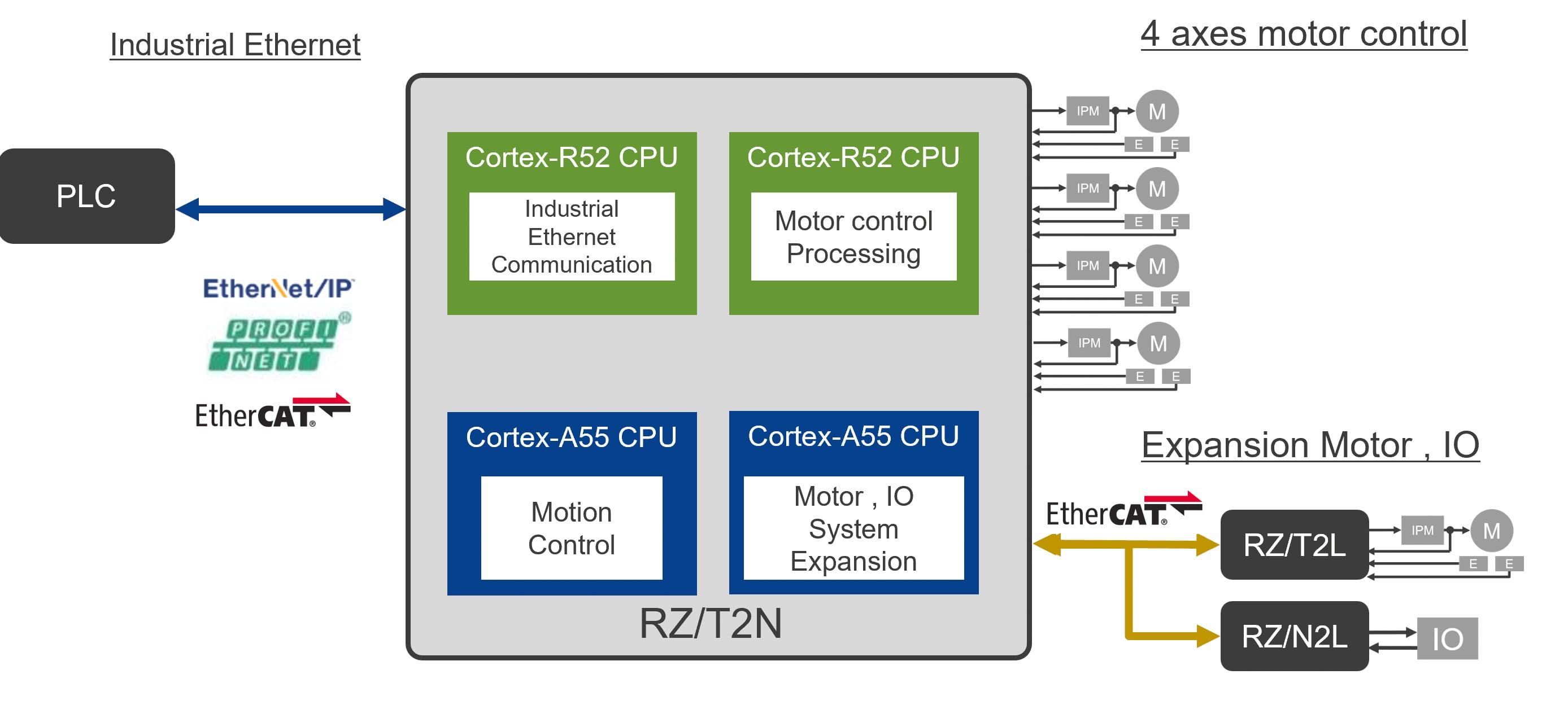
Figure 2. Robot Control Using the RZ/T2N MPU
By combining the RZ/T2N with the high-end RZ/T Series products, based on the same architecture and optimized for real-time control, or the RZ/N Series designed for industrial networks, designers can create a scalable robot platform tailored to functional safety requirements, performance requirements, and the number of axes.
For more information, visit RZ/T2N.