Sustainability Approach
Sustainability Strategy and Commitments | Materiality | Sustainability Targets | ESG Ratings, Scores, and Indices
Sustainability Strategy and Commitments
Value Creation Story
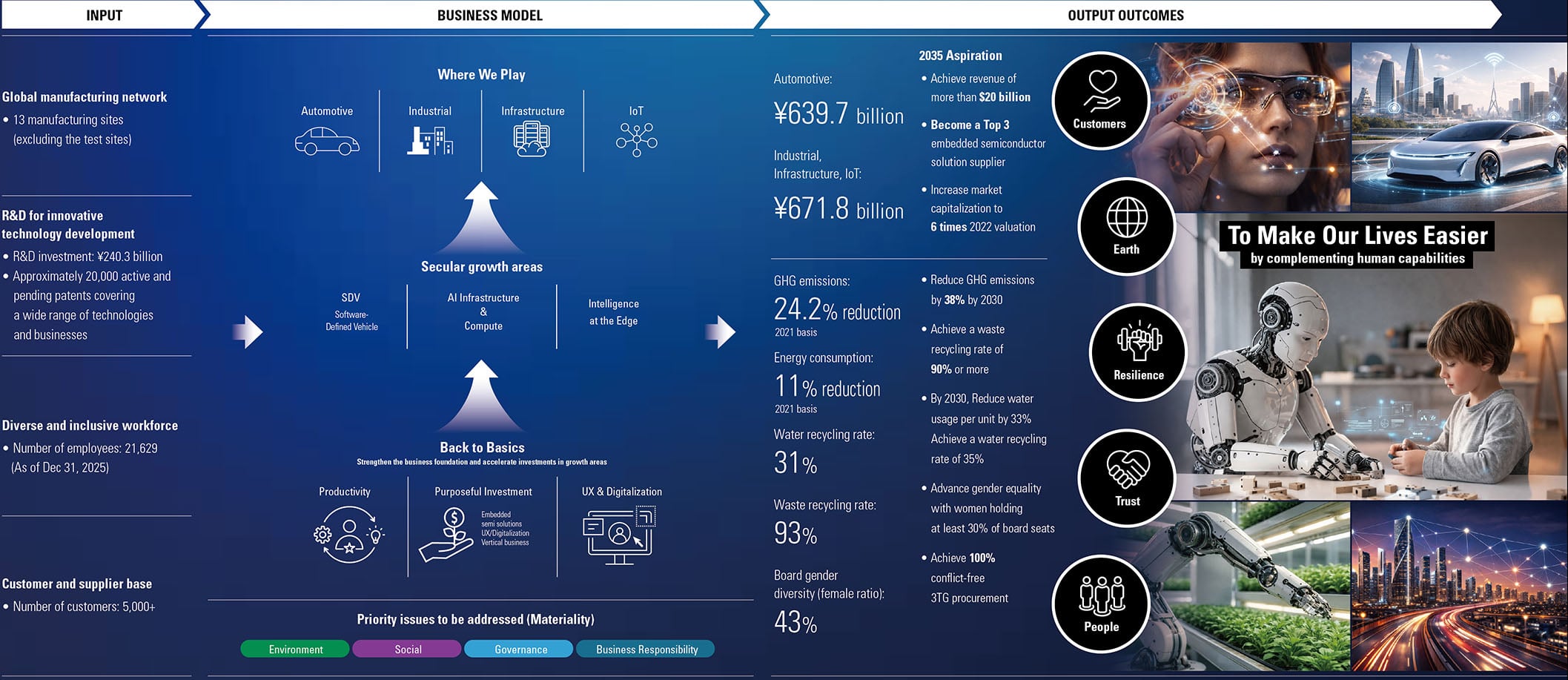
At Renesas, our value creation is rooted in our unwavering commitment to innovation, sustainability, and customer-centricity, contributing to our company purpose – To Make Lives Easier. We aim to create lasting value for our stakeholders, contribute positively to the communities in which we operate, and drive sustainable growth.
Renesas Sustainability Roadmap
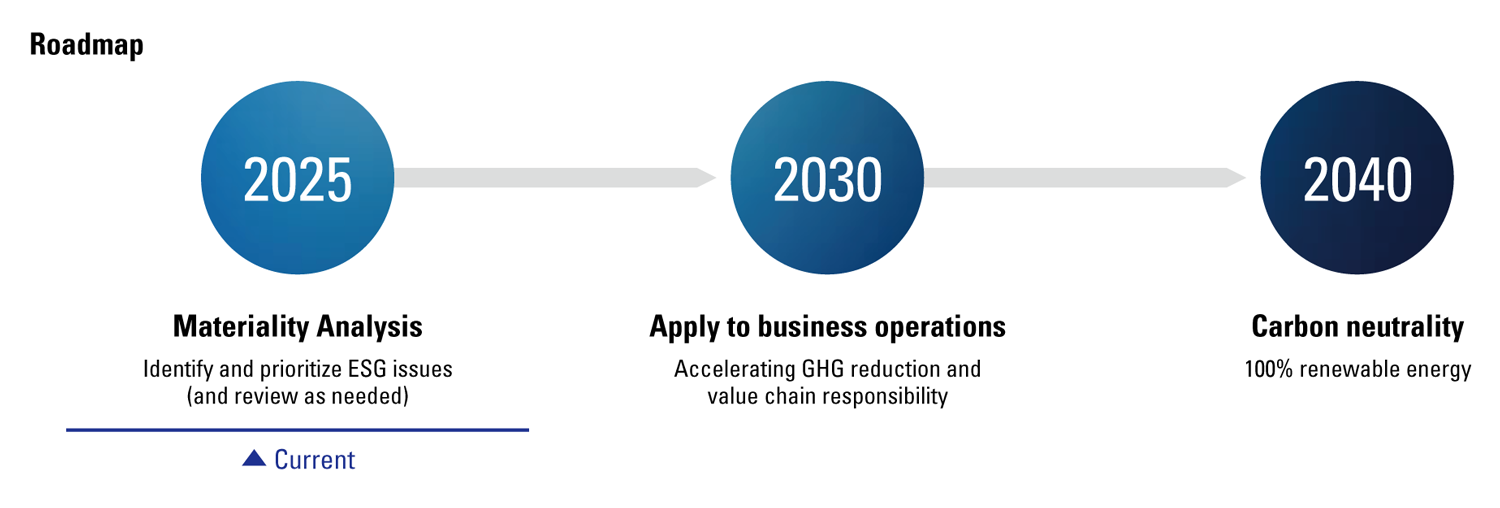
Renesas’ Sustainability Strategy 2.0 is a long-term strategy guided by our company purpose and the Renesas Electronics Group Sustainability Guiding Principles. It establishes a clear path toward our carbon neutrality goal by 2040, with interim 2030 sustainability commitments that directly align with our business aspirations.
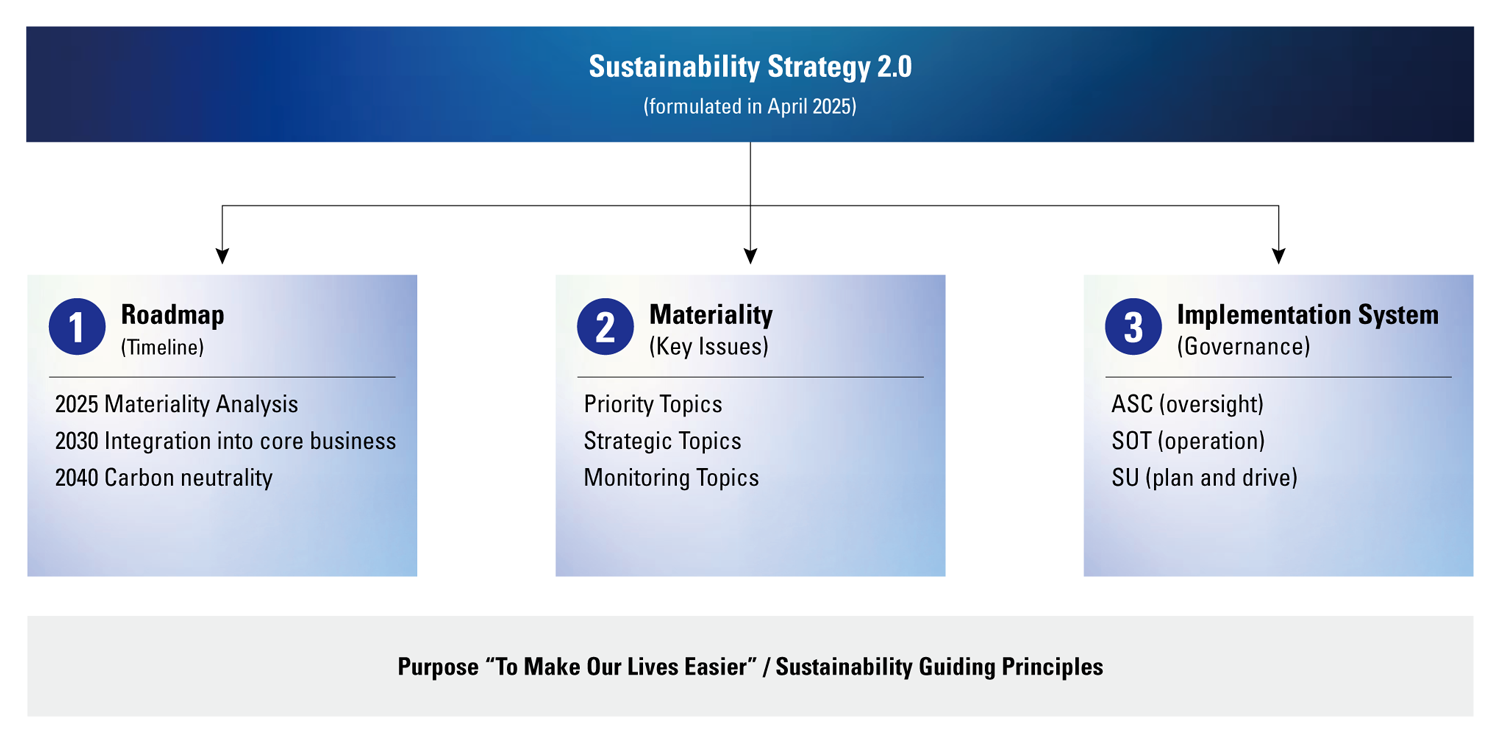
In April 2025, we formulated our Sustainability Strategy 2.0. Building on the achievements and challenges of Sustainability Strategy 1.0, launched in 2022, the new strategy aims to evolve sustainability into a growth driver by integrating key environmental, social, and governance (ESG) priorities into our management strategy and business operations.
Through this strategy, we will align our business objectives with global sustainability challenges to simultaneously enhance corporate value over the medium to long term and generate social impact, thereby delivering sustainable value to all stakeholders.
Sustainability Framework
In developing Sustainability Strategy 2.0, we built on our 2022 assessment by conducting a comprehensive gap analysis and materiality analysis. The gap analysis helped us assess the current state of our sustainability performance in light of industry peer initiatives, investor requirements, and customer expectations. The materiality analysis focused on medium- to long-term stakeholder interests and their impact on our business. These analyses incorporated feedback from investors, customers, and management, and were conducted in consideration of the evolving business environment. The final materiality map consists of three tiers: Priority Topics, Strategic Topics, and Monitoring Topics. It serves as an important guide for strategic resource allocation and progress management.
Based on the results of these analyses, Sustainability Strategy 2.0 focuses on key themes such as climate change measures, energy management, supply chain transparency, data privacy, cybersecurity, and risk management. We have set targets and KPIs for each theme and directly linked them to our management strategy.
We have also moved up our target year for achieving carbon neutrality from 2050 to 2040, clearly demonstrating our commitment to meeting industry standards and stakeholder expectations. To achieve this goal, we are advancing initiatives centered on three key pillars: reducing PFC gas emissions, expanding the use of renewable energy, and improving energy efficiency. We are making steady progress toward achieving our SBTi-certified target of reducing Scope 1 and 2 greenhouse gas emissions by 38% by 2030, compared with 2021 levels.
Stakeholder Management
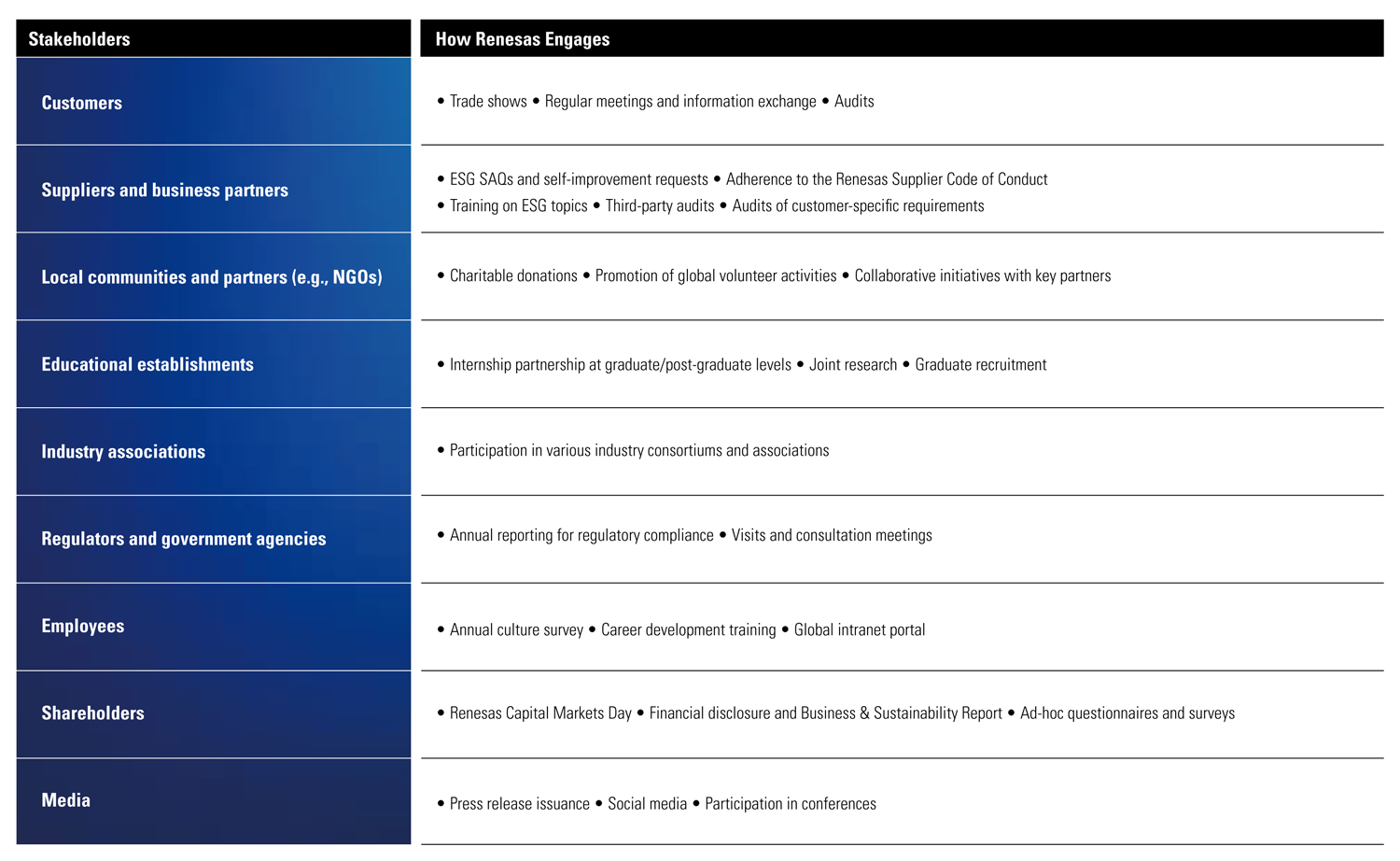
At Renesas, we recognize that our business activities and sustainability initiatives significantly impact key stakeholders and global society. That’s why we regularly engage in open discussions with key stakeholders about our responses to key issues. This approach ensures that our sustainability strategy and priorities are closely aligned with the interests of our diverse stakeholders.