
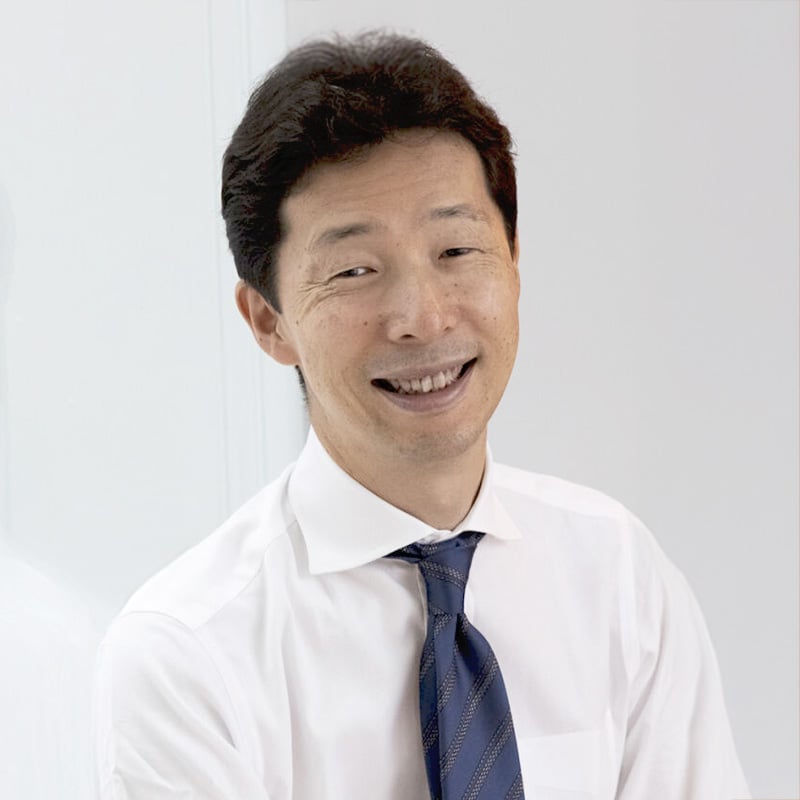
“To materialize the ‘2035 Aspiration’ and our purpose of ‘To Make Our Lives Easier,’ we will continue to provide products and solutions that make people’s lives easier. As a member of the global community, we will remain steadfast in our commitment to further enhance our corporate value by addressing environmental issues and contributing to a sustainable society.”
Reflecting on Fiscal Year 2025
Reflecting on Fiscal Year 2025 Fiscal year 2025 (January 1 – December 31) was characterized by continued geopolitical risks and heightened uncertainty in the global economy.
In the semiconductor market, demand for AI-driven data center products began to expand rapidly. We expect this momentum to persist, and we are committed to capturing this growth opportunity. In contrast, end-market demand in other sectors remained uneven. In the Industrial segment, weaker demand and prolonged inventory corrections caused the adjustment phase to extend longer than anticipated, although a recovery trend emerged in the latter half of the year. In the automotive segment, structural growth driven by automation and electrification slowed. Additionally, the rapid rise of Chinese competitors led traditional OEMs to reconsider their platform strategies, delaying transitions and resulting in softer demand. Meanwhile, China continued to demonstrate strong demand, particularly in AI, EVs, and robotics, further solidifying its market significance.
Despite these conditions, we maintained disciplined operations and viewed this extended adjustment period as preparation for the next phase of growth. By reinforcing our foundations, we accelerated investments in strategic growth areas to realize long-term, sustainable growth that is resilient to external fluctuations.
In line with the evolving business environment, we designated 2025 as our “Year of Pivot” toward sustainable and significant long-term growth. In June, we extended the target timeline for our “2030 Aspiration” to 2035 and refined our Non-GAAP operating margin target from 30% to a range of 25–30%. This adjustment provides the flexibility needed to strengthen our organizational and financial foundations and to advance long-term growth initiatives. To remain flexible and adaptive and drive continuous innovation, we advanced our “Back to Basics” strategy with a strong focus on three priorities: productivity improvement, purposeful investment, and the acceleration of our UX & Digitalization strategy. As a result, while revenue and operating income declined slightly year-over-year, gross profit increased modestly, allowing us to maintain a certain level of profitability. We proposed a year-end dividend of 28 yen per share, the same as the prior year, reaffirming our commitment to stable shareholder returns.
Key Initiatives in Fiscal Year 2025 and Ongoing Focus Areas
- Productivity Improvement
Across the company, we identified operational challenges and implemented improvements to enhance productivity and value creation. To promote collaboration, we introduced the “Back to Office” policy, rolling it out first in Japan and expanding it globally from January 2026.
- Purposeful Investment
To support mid- to long-term growth, we sharpened our strategic priorities and focused our resources more heavily on our strategic areas. These include our core embedded semiconductor solutions, UX & Digitalization, and our “Vertical” businesses, which steer our technology roadmap and deliver significant added value.
We also reinforced investments in our Secular Growth domains—Software-Defined Vehicles, AI infrastructure & compute, and Intelligence at the Edge—to further strengthen our competitiveness and profitability.
As part of these efforts, in February 2026, we signed a definitive agreement to transfer our timing business to SiTime in the U.S. for $3 billion (approx. 468 billion yen). The transfer was decided based on a determination that integration with an industry leader would create more value than continuing to invest independently in-house. Concurrently, we signed an MoU with SiTime to explore joint development of integrated solutions combining Renesas’ embedded semiconductor expertise with SiTime’s MEMS timing technology. The resulting solutions could unlock new possibilities in many applications in AI data centers, industrial equipment including robots, ADAS systems in cars, and wearables, where performance, energy efficiency and miniaturization are particularly critical. Proceeds from the transfer will be used for growth investments, shareholder returns, or both.
- UX & Digitalization Strategy Acceleration
In UX, we advanced initiatives to make customers’ development processes easier and focused on gaining earlier visibility into customer requirements to drive design-ins of our technologies. At the time of new product launches, we strengthened our ability to provide a complete “Whole Product” offering that includes not only hardware, but also application notes, manuals, software, and all other elements customers need to use our products more easily — reflecting our Purpose of making our customers’ lives easier.
In addition, we collaborated with MathWorks to integrate our products with MathWorks’ development tools, enabling users to simulate and verify the behavior of our MCUs before evaluating on actual hardware, thereby shortening the time required for system bring-up. This allows users to accelerate their development while focusing more on initiatives that enhance product quality.
In Digitalization, Altium began offering an integrated platform for electronic system design through lifecycle management. Strengthened by the acquisitions of Part Analytics and Duro Labs, this platform forms the foundation of “Renesas 365 Powered by Altium,” an industry-first platform that streamlines electronics development from semiconductor selection to lifecycle management. We are preparing for its general release at an exhibition in Germany in March.
Other key initiatives included strengthening our “India for India” strategy. We signed an MoU with the Government of India and industry and academic partners to support local startups and academic institutions and cultivate next-generation engineering talent. Additionally, through our joint venture with CG Power and Industrial Solutions and Stars Microelectronics, construction and operation of an OSAT factory in Gujarat is progressing, with the pilot line facility complete and mass production scheduled to start by the end of 2026. Construction of the mass production facility is also in progress as scheduled. We expanded the India workforce to approximately 1,000 and reinforced R&D centers in Bengaluru and Noida, positioning India—alongside China—as a key growth market.
On the product front, we advanced product development and expanded adoption with a strong focus on our Secular Growth domains. Key customer design-wins include the R-Car V4H SoC for automotive ADAS, which was selected for Denso’s TSS control unit in Toyota’s new RAV4 launched in December 2025, alongside our MCUs and power devices. We will continue to support the advancement of Software-Defined Vehicles through our intelligent in-vehicle technologies.
For AI infrastructure, we launched our first 650V GaN power semiconductors optimized for AI servers and charging systems. By leveraging Transphorm’s SuperGaN technology acquired in June 2024, we achieved lower-loss, higher-efficiency power conversion that surpasses conventional Si and SiC solutions.
For edge AI, we introduced the RA8 series of 32-bit MCUs featuring 22nm NVM technology and launched four products including the RA8P1, which integrates an AI accelerator to enable “AI on MCUs.” These products further advance “Intelligence at the Edge” by supporting the implementation of physical AI in industrial equipment and IoT applications.
Under our “Pivot” and “Back to Basics” initiatives, we achieved meaningful progress during fiscal year 2025; however, our journey is still ongoing. In the short term, demand in the AI and other sectors is expected to continue expanding and recovering. At the same time, the broader business environment remains highly volatile, making visibility challenging. We will remain steadfast and continue to reinforce our “Back to Basics” initiatives and accelerate investments in our Secular Growth domains, maintaining resilience amid changes in the external environment.
As we pursue our “2035 Aspiration” and our Purpose, “To Make Our Lives Easier,” we appreciate your continued support as Renesas advances and grows.

Hidetoshi Shibata
President and CEO
Renesas Electronics Corporation
Download the 2025 Business & Sustainability Report (Japanese)