

Choosing a processor and connecting it to a board is no longer the only step in developing an embedded vision AI product. Today's systems must be able to process camera data, run AI inference at the edge, support high-speed interfaces, and manage power effectively, all while still meeting reliability standards and reaching the market quickly.
This raises a challenging decision for many engineering teams: Should they build the compute platform from the ground up, or should they start with a proven foundation?
A system-on-module (SoM) becomes valuable in this situation. An SoM is a small, self-contained computing module that integrates the core components of a computer system onto a single board. These components typically include the processor, memory, power management, and important input/output (I/O) interfaces.
In other words, the SoM contains many of the most challenging processor-level parts of the design, including the microprocessor unit (MPU), double data rate (DDR) memory, power management integrated circuit (PMIC), and high-speed connections. Customers can design a carrier board around the SoM and focus on the product-specific aspects of their design, rather than building the full compute platform chip-down. Power input, connectors, sensors, cameras, displays, communication interfaces, and other application-specific I/O fall under this category.
For customers developing vision AI products, this approach can significantly reduce design complexity, development risk, and time-to-market, and for those developing embedded vision AI products, an RZ/V-based SoM provides a practical way to reduce design complexity, shorten development time, and scale across different performance needs.
With options ranging from the low-end RZ/V2L to the mid-range RZ/V2N and high-end RZ/V2H, customers can choose a platform that fits their AI, image processing, camera, and Linux processing requirements, on a reliable embedded foundation.
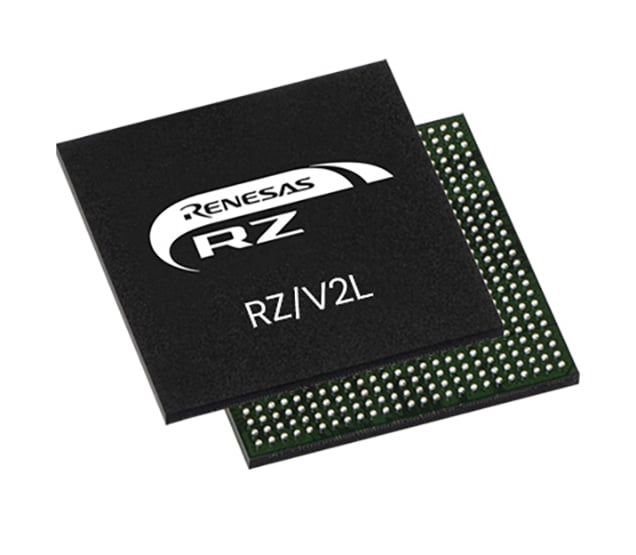
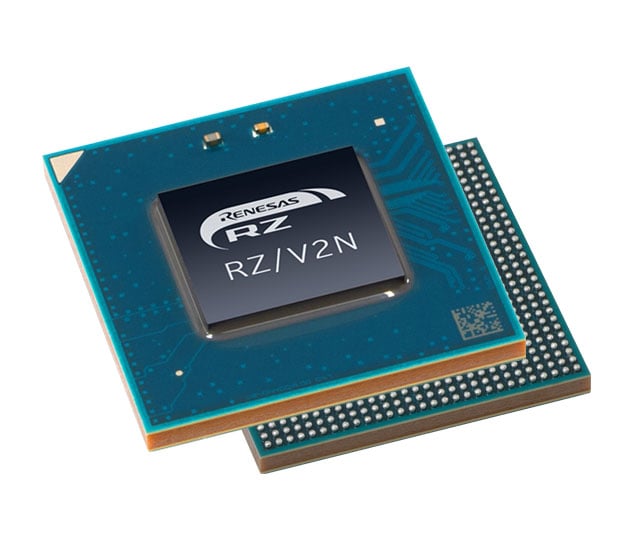
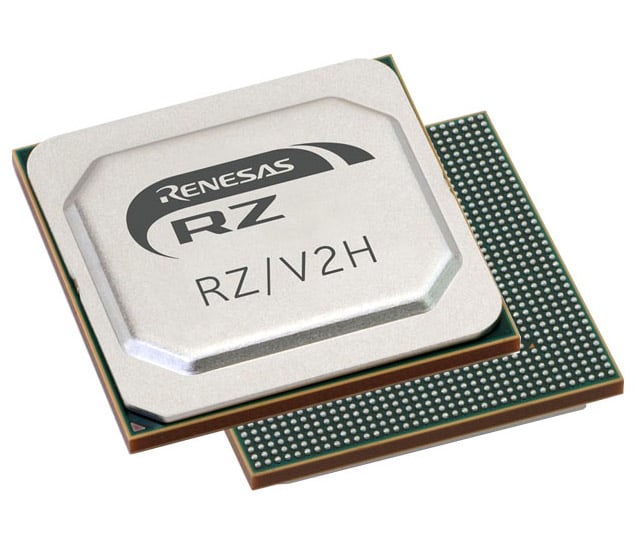
Customers often choose SoMs because they are trying to solve real design challenges. Hardware design complexity, software and board support package (BSP) integration, time-to-market pressure, cost and resource constraints, and certification and reliability, are the five main categories into which these challenges typically fall.
- Hardware Design Complexity: An SoM simplifies product development by handling complex processor hardware in advance, such as DDR, power, high-speed interfaces, thermal design, and electromagnetic interference/electromagnetic compatibility (EMI/EMC). This lets customers focus on the carrier board and unique product features.
- Software and BSP Integration: In this case, a pre-validated SoM reduces both hardware and software development effort by avoiding complex low-level setup, helping teams focus more on building vision AI applications.
- Time-to-Market Pressure: An SoM speeds development by providing a ready-to-integrate compute platform that allows customers to move quickly from design to prototyping, integration, and launch.
- Cost and Resource Constraints: Teams with limited resources can reduce development effort, lower non-recurring engineering (NRE), and avoid costly redesigns, with an SoM, often lowering overall project cost despite a higher unit price.
- Certification and Reliability: A validated SoM helps improve reliability and reduces compliance risk, helping customers achieve more predictable validation, production, and long-term deployment.
SoM Form Factors
Renesas RZ/V-based SoMs are available in different module form factors, including open standard module (OSM), smart mobility architecture (SMARC), and proprietary designs, giving customers flexibility based on their product needs.
OSM modules are compact and solderable, making them a strong fit for space-constrained vision AI products such as smart cameras, embedded vision systems, and compact edge AI devices. Since SMARC modules employ a standardized edge-connector method, they are helpful for designs like robotics, human machine interface (HMI), industrial automation, and multimedia systems that require flexible I/O, simpler upgrades, and expansion.
Proprietary modules are partner-specific and can be optimized for unique industrial, medical, robotics, or AI applications that require special mechanical, thermal, or I/O features. Single-board computers (SBCs) are also available for some RZ/V solutions, providing a ready-to-use platform that is useful for evaluation, prototyping, software development, and community-driven projects, although they are typically less common in higher-volume deployment than SoM-based designs.
All form factor options let customers select the ideal combination of size, flexibility, performance, and customization for vision AI products across the RZ/V2L, RZ/V2N, and RZ/V2H families.
When comparing SoM form factors, size is one of the first differences customers notice. OSM modules are generally the smallest option because they are compact and soldered directly to the carrier board.
SMARC modules are typically larger because they use an edge connector, but that added footprint can support more expansion flexibility. Proprietary modules vary the most in size because they are designed around specific partner or end-product requirements.
| Feature | OSM Module | SMARC Module | Proprietary Module |
|---|---|---|---|
| Form Factor Style | Compact, solderable module for space-constrained designs. | Standardized edge-connector module for flexible carrier board design. | Specific module tailored to a particular product. |
| Application Fit | Strong fit for compact vision AI and embedded camera systems. | Good fit where expandability and flexible I/O are priorities. | Good fit for optimized or highly specialized end products. |
| Typical Benefits | Smaller footprint, rugged integration, simplified system design. | Easier upgrade path, modularity, and flexible expansion. | Optimized around specific application or customer requirements. |
| Design Tradeoff | Less modular than edge-connector formats, but very compact. | Larger footprint than OSM, but more flexible for carrier expansion. | Less standardized but can offer the best application fit. |
| Why Customers Choose It | To reduce hardware complexity and accelerate compact AI product design. | To balance performance, flexibility, and development speed. | To match a unique system requirement that standard form factors may not address. |
Table 1. Key SoM Form Factors for Renesas RZ/V Devices
For a broader view of Renesas partner solutions, including SoMs, SBCs, and other RZ-based offerings, visit the Renesas Partner Program website.
| Type of Application | Form Factor | Partner Companies |
|---|---|---|
| Low-End Range (RZ/V2L) | OSM | Geniatech (Size-L) and iWave (Size-L) |
| SMARC | TRIA (Half-Size), Aries Embedded (Half-Size), iWave (Full-Size), MXT (Half-Size), and Regulus (Full-Size) | |
| Proprietary | SolidRun, Vekatech, OneKiwi Technology (LGA Solder-Down), SomLabs (SODIMM), Calixto Systems (Optima SoM), Calixto Systems (Versa SoM), Mistywest, and Scalys | |
| SBC | SolidRun, Geniatech, MXT, iWave, Novtech, and Vekatech | |
| Mid-End Range (RZ/V2N) | OSM | MiTwell (Size-M), Geniatech (Size-M), and Ronetix |
| SMARC | Tessolve (Full-Size) and Ronetix (Full-Size) | |
| Proprietary | IMDT, SolidRun, Alp Lab, SomDevices, and BananaPi | |
| SBC | IMDT, and MXT | |
| High-End Range (RZ/V2H) | OSM | MiTwell (Size-L), Geniatech (Size-L), ARIES Embedded GmbH (Size-L), and Embedian (Size-L) |
| SMARC | Tessolve (Full-Size) | |
| Proprietary | IMDT, Engicam, BananaPi, Grinn, and OneKiwi Technology | |
| SBC | IMDT, Alpha Project, AMATAMA, and Brains |
Table 2. Partner Companies by Application Type and Form Factor
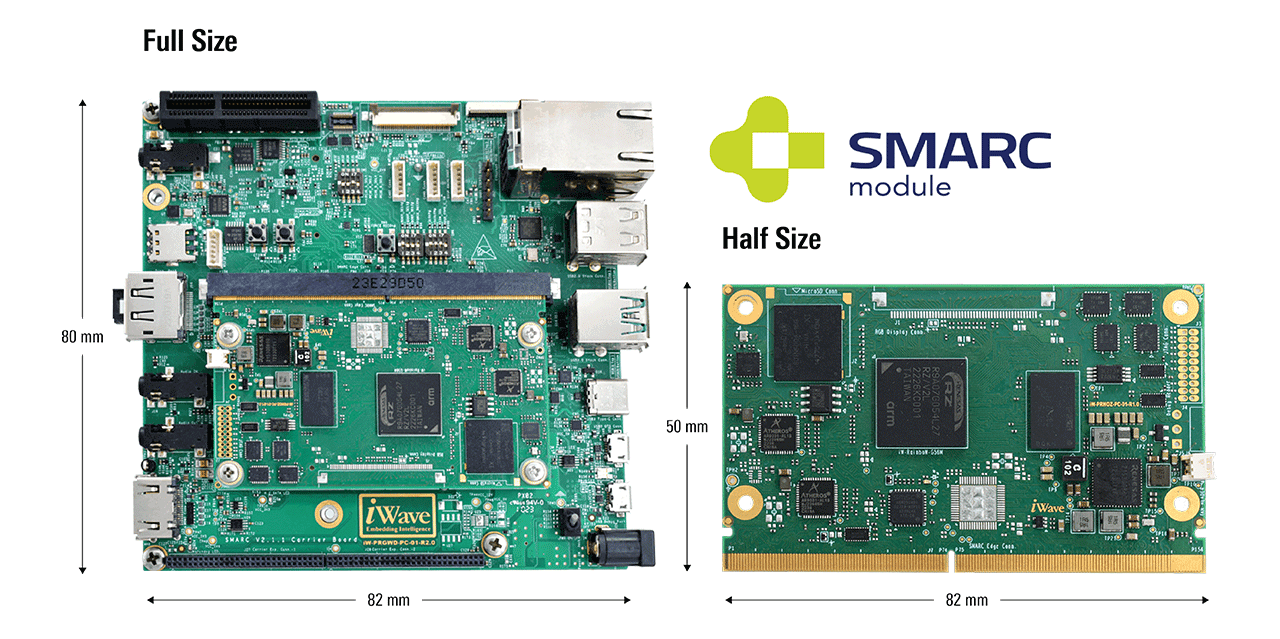
Figure 1. Examples of SMARC SoMs Renesas Uses
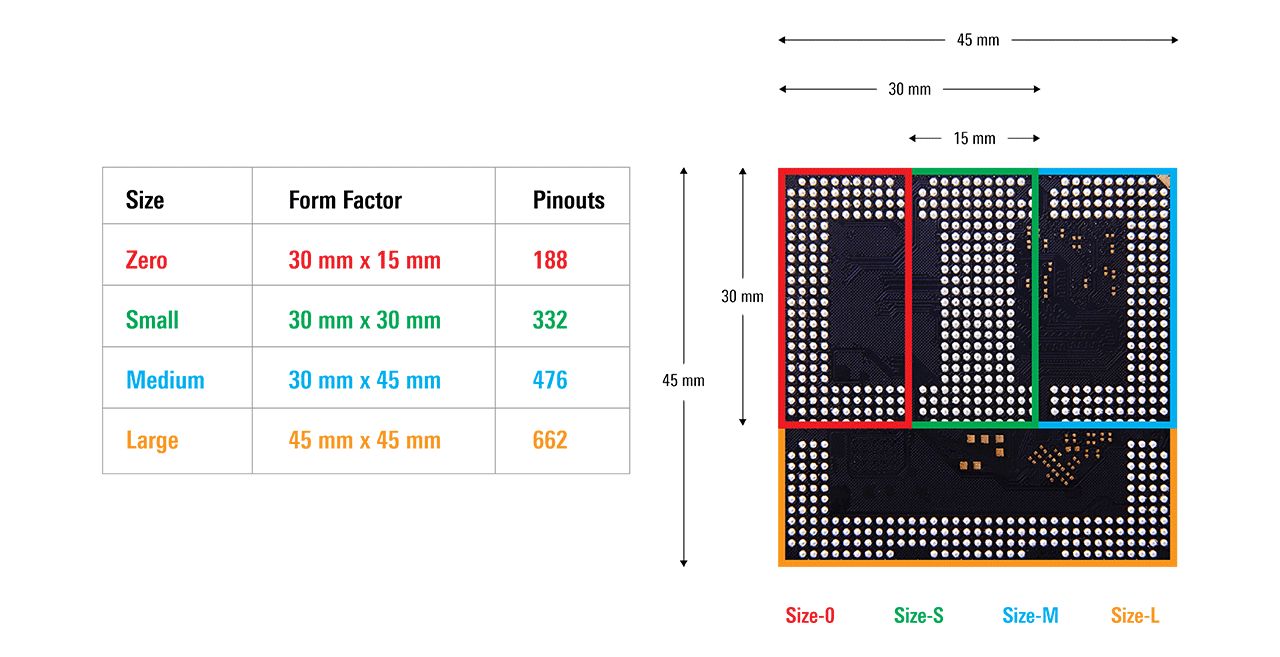
Figure 2. Examples of OSM SoMs Renesas Uses - Variations Across the OSM Standard
Why SoMs are Becoming More Important
The SoM market is still expanding as embedded systems become increasingly complex and customers seek more processing power. Platforms for edge AI, robotics, industrial automation, medical devices, smart cameras, IoT edge systems, and human-machine interfaces are now in high demand.
Several significant trends are driving this expansion. Firstly, more products are moving intelligence to the edge, instead of relying fully on cloud processing. This means devices must make decisions locally, frequently using camera or sensor data.
Secondly, customers are pushing for quicker product launches while still reducing risk and development costs.
Lastly, engineering teams are often smaller and may not have deep expertise in every aspect of hardware, software, power, thermal, and compliance design.
As a result, an SoM offers customers a faster, more predictable method of development. Teams can begin with a pre-validated module and move directly into carrier board design, system integration, software development, and application-level innovation instead of spending months building and validating a processor platform from scratch.
SoM vs. Chip-Down Design
The main difference between an SoM and a chip-down design is how much of the compute platform the customer wants to develop themselves.
In a chip-down design, the customer is responsible for the full processor platform, including MPU integration, DDR, power, high-speed interfaces, BSP bring-up, debugging, compliance, and manufacturing validation. This approach offers maximum design control and can provide bill of materials (BoM) advantages in high-volume products, but it also requires more time, resources, and technical expertise.
With an SoM, the customer starts with a pre-validated compute module that has already addressed the most complex processor-level design work. This helps reduce development effort and lets teams move more quickly into carrier board design, software development, system integration, and product differentiation.
In general, SoMs are often a better fit for low- and mid-volume designs where faster development and lower risk matter most. Chip-down designs may be more attractive in high-volume cases where BoM optimization justifies the added engineering investment.
A Faster Path to Vision AI Products
As vision AI grows across industrial, robotics, IoT, automotive, medical, and smart device markets, customers need platforms that help them develop faster without adding risk. Renesas RZ-based SoMs support this by combining scalable vision AI MPUs with a modular development approach, helping reduce design complexity and low-level integration work.
However, bringing a complete vision-AI product to market often requires more than the SoM itself. Developers may also need compatible camera solutions, operating system platforms, AI model optimization expertise, and other application-specific technologies.
Through the Renesas Partner Program, customers can access a broader ecosystem of partners that complement the SoM platform and help address these additional development needs.
The RZ/V2L, RZ/V2N, and RZ/V2H MPUs give customers options ranging from entry-level vision AI to high-end robotics and real-time control. Whether building a smart camera, industrial vision system, healthcare device, or robotics platform, the combination of modular hardware and ecosystem support can provide a faster and more flexible path from prototype to production.