
| CAD Model: | View CAD Model |
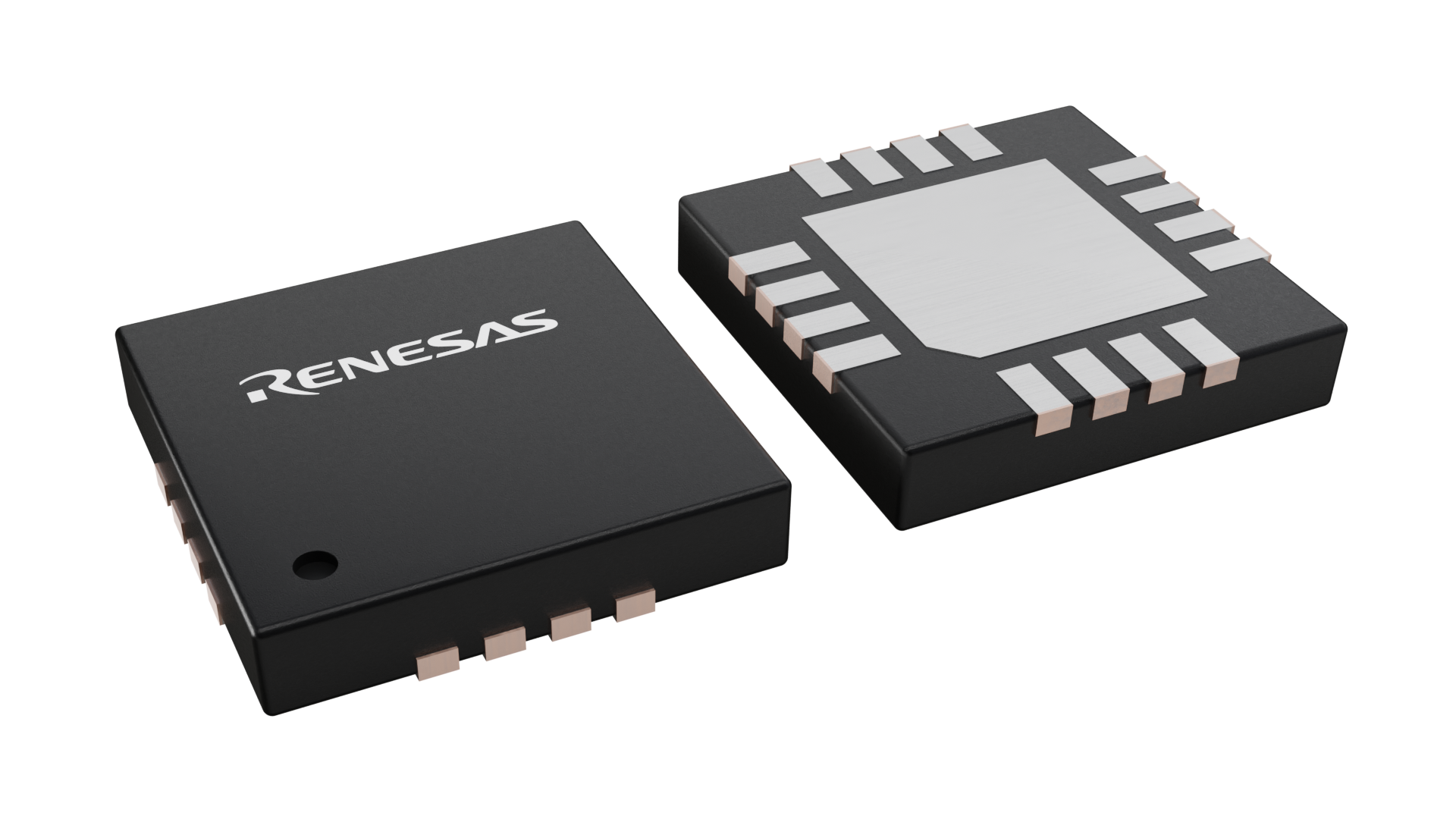
| Pkg. Type: | QFN |
| Pkg. Code: | LFJ |
| Lead Count (#): | 16 |
| Pkg. Dimensions (mm): | 5.0 x 5.0 x 0.90 |
| Pitch (mm): | 0.8 |
| ECCN (US) | EAR99 |
| HTS (US) | 8542.39.0090 |
| RoHS (ISL6522IRZ-T) | Download |
| Moisture Sensitivity Level (MSL) | 3 |
| Pb (Lead) Free | Yes |
| Pkg. Type | QFN |
| Carrier Type | Reel |
| Country of Assembly | MALAYSIA |
| Country of Wafer Fabrication | USA |
| Bias Voltage Range (V) | 12 - 12 |
| IS (Typical) | 5 |
| Input Voltage (Max) (V) | 12 |
| Input Voltage (Min) (V) | 2.5 |
| Lead Count (#) | 16 |
| Length (mm) | 5 |
| MOQ | 6000 |
| Moisture Sensitivity Level (MSL) | 3 |
| Output Current (Max) [Rail 1] (A) | 25 |
| Output Voltage (Max) (V) | 12 |
| Output Voltage (Min) (V) | 0.8 |
| Pb (Lead) Free | Yes |
| Pb Free Category | Pb-Free 100% Matte Tin Plate w/Anneal-e3 |
| Pitch (mm) | 0.8 |
| Pkg. Dimensions (mm) | 5.0 x 5.0 x 0.90 |
| Qualification Level | Standard |
| Temp. Range (°C) | -40 to +85°C |
| Thickness (mm) | 0.9 |
| VBIAS (Max) (V) | 12 |
| VBIAS (Min) (V) | 12 |
| Width (mm) | 5 |
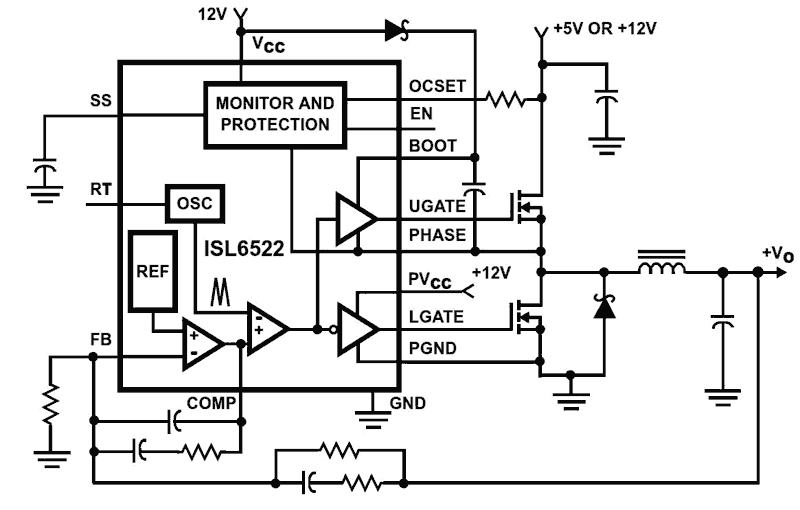
The ISL6522 provides complete control and protection for a DC-DC converter optimized for high-performance microprocessor applications. It is designed to drive two N-Channel MOSFETs in a synchronous rectified buck topology. The ISL6522 integrates all of the control, output adjustment, monitoring and protection functions into a single package. The output voltage of the converter can be precisely regulated to as low as 0.8V, with a maximum tolerance of ±1% over temperature and line voltage variations. The ISL6522 provides simple, single feedback loop, voltage-mode control with fast transient response. It includes a 200kHz free-running triangle-wave oscillator that is adjustable from below 50kHz to over 1MHz. The error amplifier features a 15MHz gain-bandwidth product and 6V/µs slew rate which enables high converter bandwidth for fast transient performance. The resulting PWM duty ratio ranges from 0-100%. The ISL6522 protects against overcurrent conditions by inhibiting PWM operation. The ISL6522 monitors the current by using the rDS(ON) of the upper MOSFET which eliminates the need for a current sensing resistor.
