なぜeモビリティには、より優れたダッシュボードが必要なのか
電動スクーターや電動バイク、小型の都市型EVのドライバーは、混雑した交通環境や短距離移動、頻繁なストップ&ゴーといった条件下で日常的に走行しています。そのため、迅速な判断を行ううえでインストルメントクラスタへの依存度が非常に高くなります。 小型ディスプレイであっても、強い日差しや風雨にさらされる環境下で、航続距離、バッテリの状態、警告情報を瞬時に把握できなければなりません。 同時にOEMは、コスト、消費電力、実装スペースを厳しく管理しながら、ライダーやフリート事業者向けの接続機能も提供する必要があります。
現代のeモビリティ向けクラスタに対するユーザの期待
ライダーや配送事業者は、「デジタルダッシュボード」が従来のアナログメータではなく、シンプルなスマートフォンのように直感的に操作・表示できることを期待しています。
- 航続距離と充電状態を明確に表示: コンパクトなTFTディスプレイには、速度、充電率(SoC)、推定残り航続距離をひと目で確認できる表示が求められます。昼夜を問わず視認性の高いグラフィックスも不可欠です。
- 充電状況と車両状態の可視化: 充電ステータス、異常、必要な点検などをアイコン中心で分かりやすく表示することは、特に利用者が頻繁に入れ替わるシェア車両やフリート車両において信頼性向上につながります。
- 軽量な接続機能: Bluetooth® およびWi-Fi® によるスマートフォン連携、アプリ統合、基本的なナビゲーション機能は、エントリーレベルの電動スクーターやバイクにおいても、ますます標準的な要件となりつつあります。
TFTベースのデジタルクラスタは、これらのニーズに適しています。ハードウェアプラットフォームを共通化し、ソフトウェアやグラフィックスの変更のみで複数の車種へ展開できるためです。
日常用途の電動スクーター向けコスト最適化TFTクラスタ
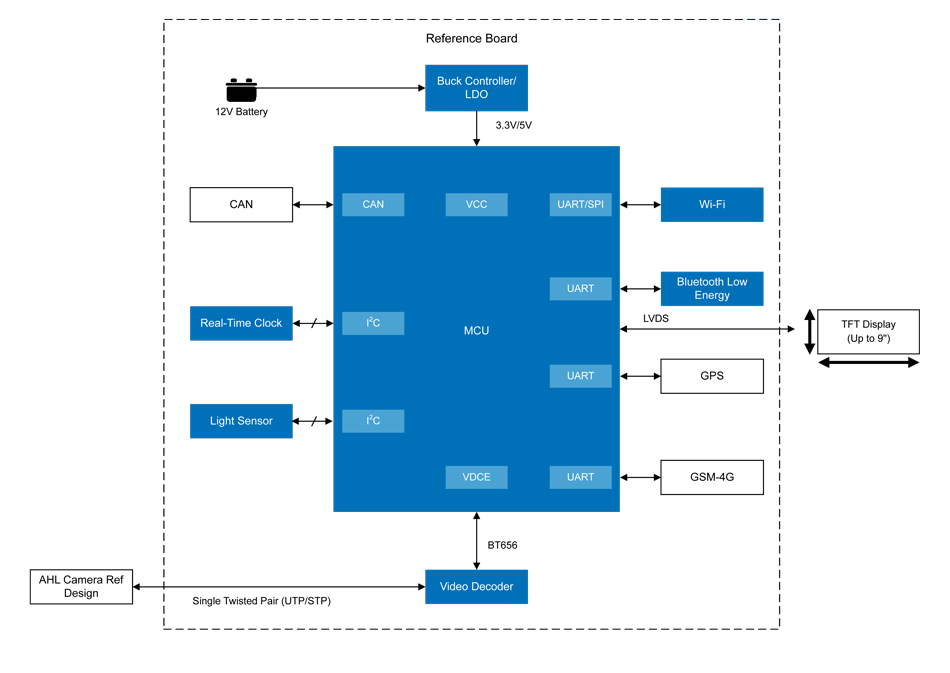
通勤用電動スクーター、配送用スクーター、eバイク、小型カーゴ三輪車では、コストと効率があらゆる設計判断を左右します。 当社の テレマティクス対応・低コストTFTインストルメントクラスタソリューションは、MCU中心のアーキテクチャにより、電子回路をコンパクトに抑えつつ、最新のユーザ体験を提供します。
一般的なeモビリティ実装では、グラフィックス機能を備えた車載マイクロコントローラが小型カラーTFTを直接駆動し、速度、充電率(SoC)、航続距離、警告インジケータを2D/2.5Dで描画します。
- デュアルCANなどのデュアル車載ネットワークインタフェースにより、クラスタはモーターコントローラ、バッテリマネジメントシステム(BMS)、補助ECUと接続されます。同時に、サービスツール向けに独立した診断チャネルも確保します。
- 統合テレマティクス機能 (Wi-Fiミラーリング、Bluetooth Low Energy、Ethernet、GPS、オプションの4G)により、別体の通信ユニットが不要となり、スマートフォン連携、基本的なナビゲーション、フリートトラッキングを単一設計で実現できます。
- 車載 HDビデオリンク は、単一のツイストペアケーブルを介して低コストのアナログリアカメラに接続され、配送用スクーターや小型カーゴ車両において、追加コストを最小限に抑えながらシンプルな後方視認機能を実現します。
AI対応テレマティクスを備えたスケーラブルTFTクラスタ
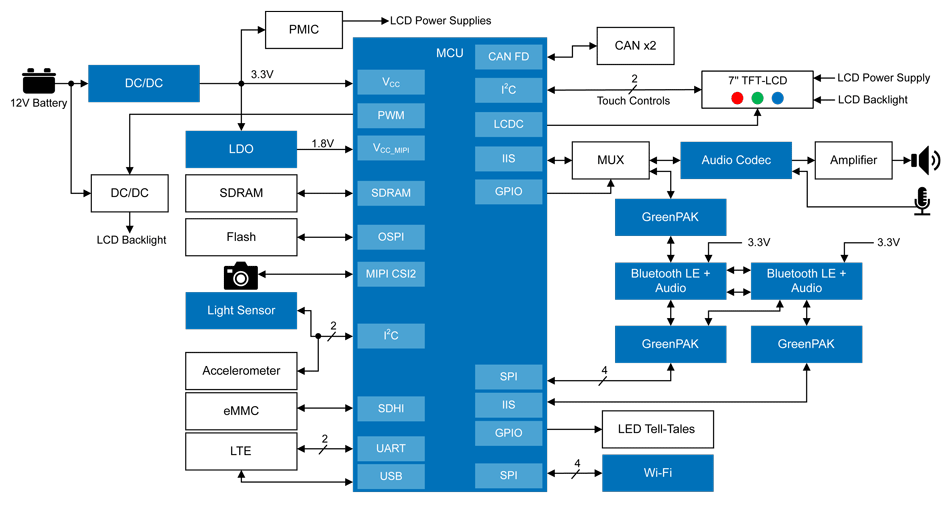
基本的なMCUベースのクラスタとフルAndroidコックピットの中間に位置するeモビリティプラットフォームでは、LinuxやAndroidスタックへ移行することなく、より高度なグラフィックス、統合テレマティクス、将来的なインテリジェンス拡張への余地が求められます。 Bluetoothオーディオ およびテレマティクス対応TFTインストルメントクラスタソリューション は、デュアルコアRA8P1マイクロコントローラとオンチップNPU(ニューラルプロセッシングユニット)を搭載し、エッジ解析を可能にすることで、この中間ニーズに応えます。
この構成には以下の機能が含まれます。
- デュアルコアのRA8P1マイクロコントローラは、メインのクラスタアプリケーションとテレマティクス機能の両方を1チップ上で実行し、システム全体のコストおよび基板の複雑さを低減します。
- オンチップNPUにより、クラウド接続に依存することなく、ローカルでの異常検知、使用状況分析、予知保全といったAI対応ユースケースをエッジ側で直接実現できます。
- ベアメタルC、またはAzure RTOSやFreeRTOSなどのRTOSベースのサンプルアプリケーションソフトウェアやファームウェアを提供しており、LinuxやAndroidに関する専門知識を必要とせず、迅速な開発立ち上げを支援します。
リファレンスボードには、CAN、Wi-Fi、Bluetooth Low Energy、GPS、GSM 4G などの接続インタフェースをあらかじめ搭載しており、フリートトラッキング、リモート診断、スマートフォン連携サービスの追加を容易にします。
このプラットフォームは、Qt、Crank、Segger、LVGL などの主要なHMIフレームワークを用いたスマートフォンのようなUIをサポートしており、コンパクトなTFT上でもモダンで表現力の高いグラフィックスを容易に実現できます。
機能豊富な都市型EV向けコネクテッドコックピット
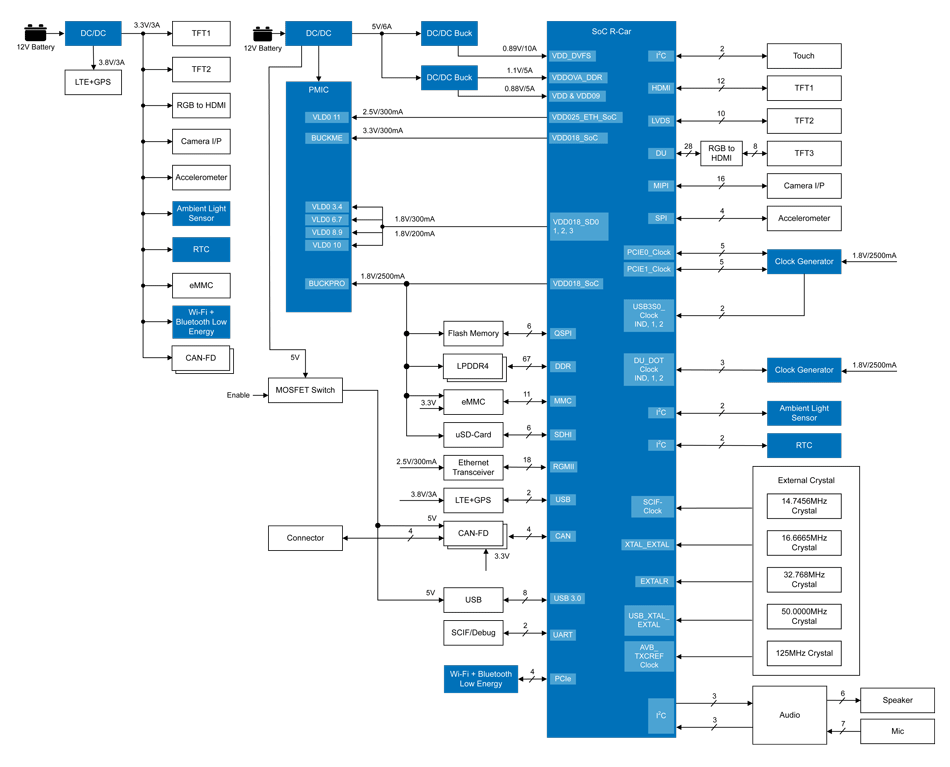
一部の都市型EVや上位モデルの電動モータサイクルでは、基本的なメータクラスタ以上の機能が求められます。これらの車両は、ナビゲーション、高度なHMI、アプリ連携サービスのハブとして機能します。 当社の Androidベース車載インストルメントクラスタ向けコネクテッド ソリューションは、こうした用途を想定し、SoCベースのアーキテクチャを採用しています。複数ディスプレイへの拡張や、フル機能のコネクテッドコックピット体験に対応可能です。
この構成には以下の機能が含まれます。
- マルチコア処理に対応した R-Car車載SoC が、メインのインストルメントクラスタを駆動し、必要に応じてセンターディスプレイやパッセンジャーディスプレイも制御します。これにより、複雑なグラフィックス、地図表示、メディア処理を高いパフォーマンスで実現します。
- Androidはインフォテインメントおよびコネクテッドアプリケーションをホストし、リアルタイム環境が速度表示、警告表示、その他のセーフティクリティカルなクラスタ機能に対して決定論的な動作を実現します。
- 内蔵Wi-Fi、Bluetooth、ならびにオプションのLTE接続 を通じて、パワートレイン、バッテリ、シャシーに関するデータを取得し、高度なエネルギー可視化や、ドライバーおよびライダー向けの状況認識型アラートを可能にします。
- CAN/CAN FDやEthernetなどの車載ネットワーク を通じて、パワートレイン、バッテリ、シャシーに関するデータを取得し、高度なエネルギー可視化や、ドライバーおよびライダー向けの状況認識型アラートを可能にします。
次世代クラスタをeモビリティへ
電動スクーター、電動バイク、コンパクトな都市型EVの進化は、より高効率で、よりコネクテッド、そしてよりユーザフレンドリーな車両へのニーズによって加速しています。 コスト最適化されたMCUベースのTFTクラスタと、拡張性に優れたAndroid搭載コックピットを組み合わせることで、メーカーはeモビリティ製品ライン全体にわたり、視認性、接続性、性能の最適なバランスを実現できます。
テレマティクスを備えた低コストTFTインストルメントクラスタ や コネクテッドAndroidベースの車両インストルメントクラスタ などの実績あるアプリケーション設計を活用することで、設計リスクを低減し、次世代デジタルダッシュボードの市場投入までの期間を短縮できます。 これらを含むウィニング・コンビネーションの詳細は、 renesas.com/win をご覧ください。