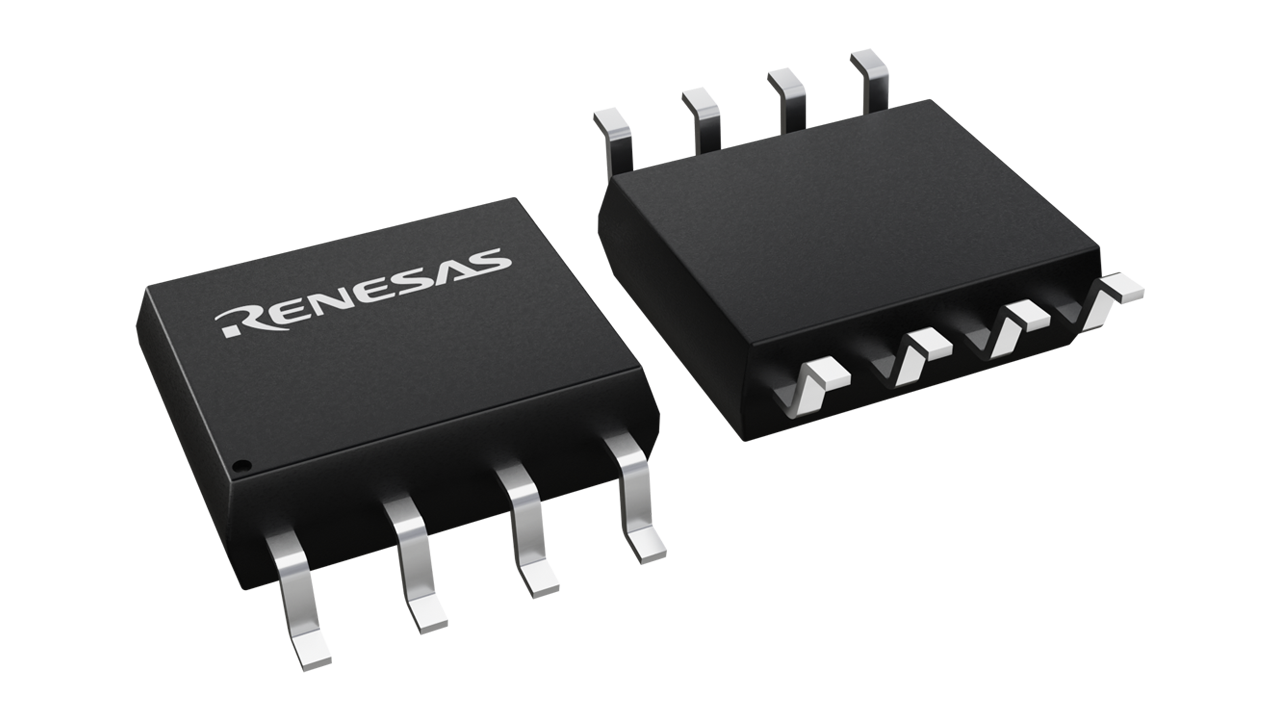

パッケージ情報
| CADモデル: | View CAD Model |
| Pkg. Type: | SOIC |
| Pkg. Code: | DCG8 |
| Lead Count (#): | 8 |
| Pkg. Dimensions (mm): | 4.9 x 3.9 x 1.5 |
| Pitch (mm): | 1.27 |
環境及び輸出分類情報
| Pb (Lead) Free | Yes |
| Moisture Sensitivity Level (MSL) | 1 |
| ECCN (US) | |
| HTS (US) |
製品スペック
| Pkg. Type | SOIC |
| Lead Count (#) | 8 |
| Pb (Lead) Free | Yes |
| Carrier Type | Tube |
| Accepts Spread Spec Input | No |
| Advanced Features | Reference Output |
| Core Voltage (V) | 3.3 |
| Input Freq (MHz) | 16.2 - 28 |
| Length (mm) | 4.9 |
| MOQ | 388 |
| Moisture Sensitivity Level (MSL) | 1 |
| Output Freq Range (MHz) | 16.2 - 28 |
| Output Type | LVCMOS |
| Output Voltage (V) | 3.3 |
| Outputs (#) | 1 |
| Package Area (mm²) | 19.1 |
| Pb Free Category | e3 Sn |
| Period Jitter Typ P-P (ps) | 110 |
| Pitch (mm) | 1.27 |
| Pkg. Dimensions (mm) | 4.9 x 3.9 x 1.5 |
| Qty. per Carrier (#) | 97 |
| Qty. per Reel (#) | 0 |
| Reference Output | Yes |
| Requires Terms and Conditions | Does not require acceptance of Terms and Conditions |
| Spread Spectrum | No |
| Supply Voltage (V) | 3.3 - 3.3 |
| Tape & Reel | No |
| Temp. Range (°C) | 0 to 70°C |
| Thickness (mm) | 1.5 |
| Width (mm) | 3.9 |
| Xtal Freq (KHz) | 16.2 - 28 |
| Xtal Inputs (#) | 1 |
MK3721 に関するリソース
説明
The MK3721 series of devices includes the original MK3721S and the new MK3721D. The MK3721D is a drop-in replacement for the MK3721S device. Compared to the earlier device, the MK3721D offers a wider operating frequency range and improved power supply noise rejection. The MK3721 is a low-cost, low-jitter, high-performance 3.3 volt VCXO designed to replace expensive discrete VCXOs modules. The on-chip Voltage Controlled Crystal Oscillator accepts a 0 to 3.3 V input voltage to cause the output clocks to vary by ±100 ppm. Using IDT's patented VCXO techniques, the device uses an inexpensive external pullable crystal in the range of 16.2 to 28 MHz to produce a VCXO output clock at that same frequency. IDT manufactures the largest variety of Set-Top Box and multimedia clock synthesizers for all applications. If more clock outputs are needed, see the MK3732 or MK377x family of parts. Consult IDT to eliminate VCXOs, crystals, and oscillators from your board. The frequency of the on-chip VCXO is adjusted by an external control voltage input into pin VIN. Because VIN is a high-impedance input, it can be driven directly from a PWM RC integrator circuit. Frequency output increases with VIN voltage input. The usable range of VIN is 0 to 3.3 V.