


| CAD Model: | View CAD Model |
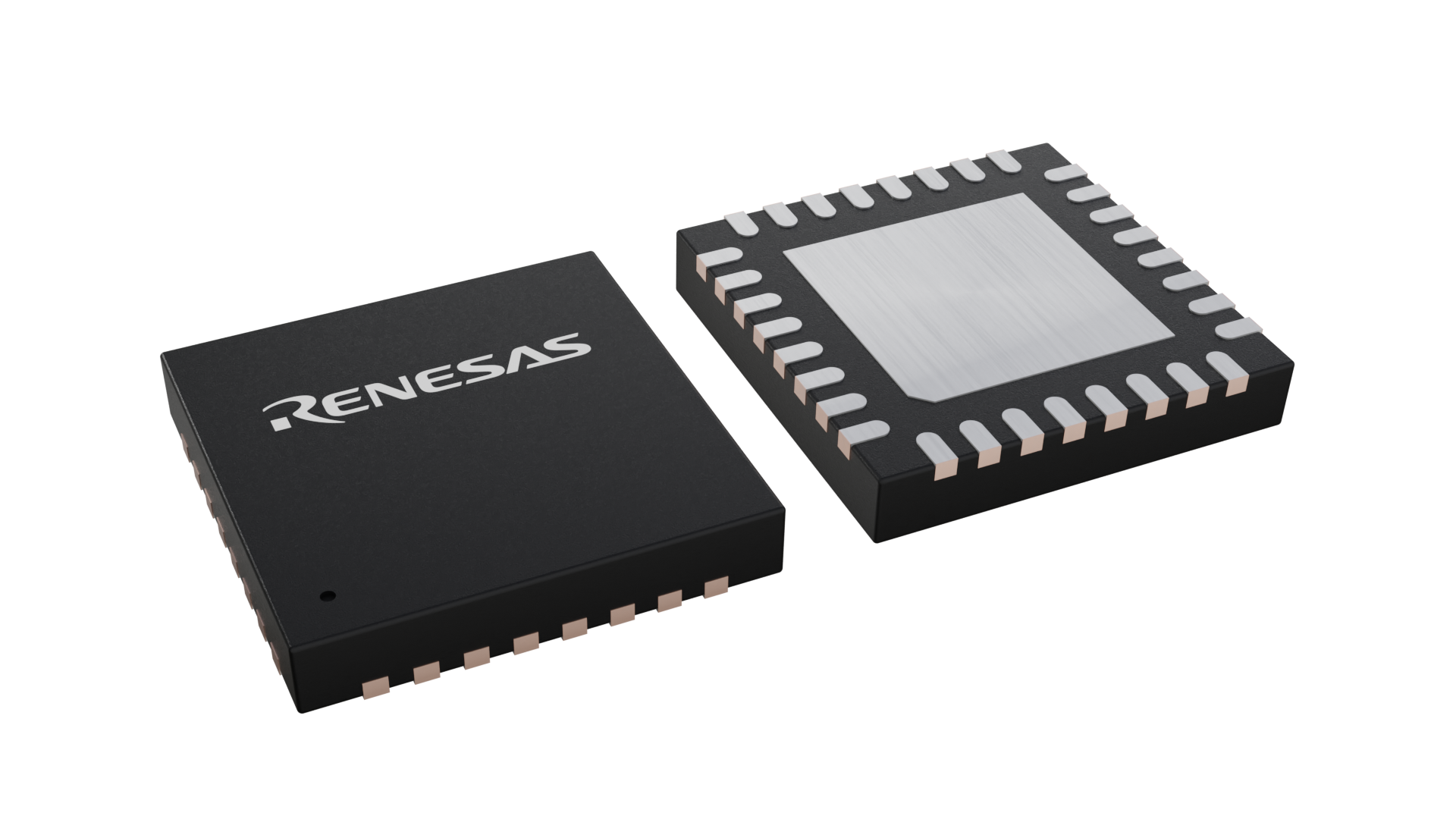
| Pkg. Type: | VFQFPN |
| Pkg. Code: | NLG32 |
| Lead Count (#): | 32 |
| Pkg. Dimensions (mm): | 5.0 x 5.0 x 0.9 |
| Pitch (mm): | 0.5 |
| Moisture Sensitivity Level (MSL) | 1 |
| Pb (Lead) Free | Yes |
| ECCN (US) | EAR99 |
| HTS (US) | 8542.39.0090 |
| Lead Count (#) | 32 |
| Carrier Type | Reel |
| Moisture Sensitivity Level (MSL) | 1 |
| Pitch (mm) | 0.5 |
| Pkg. Dimensions (mm) | 5.0 x 5.0 x 0.9 |
| Qty. per Reel (#) | 5000 |
| Pb (Lead) Free | Yes |
| Pb Free Category | e3 Sn |
| Temp. Range (°C) | -40 to 125°C |
| Wafer Fab Location | GERMANY |
| Assembly Location | THAILAND |
| Adj. Analog Gain | 3 - 3, 7 - 7, 9 - 9, 14 - 14, 26 - 26, 35 - 35, 52 - 52, 70 - 70, 105 - 105, 140 - 140, 210 - 210, 280 - 280, 420 - 420 |
| Automotive Qual. | Yes |
| Function | Resistive SSC |
| Input Type | Single-bridge |
| Interface | Ratiometric Voltage, ZACwire™, I2C, Dual Analog Out |
| Length (mm) | 5 |
| MOQ | 5000 |
| Package Area (mm²) | 25 |
| Pkg. Type | VFQFPN |
| Qty. per Carrier (#) | 0 |
| Qualification Level | Automotive |
| Reel Size (in) | 13 |
| Requires Terms and Conditions | Does not require acceptance of Terms and Conditions |
| Resolution (bits) | 14 |
| Sample Rate Max (KHz) | 2 |
| Supply Voltage (V) | 4.5 - 5.5 |
| Tape & Reel | Yes |
| Thickness (mm) | 0.9 |
| Width (mm) | 5 |
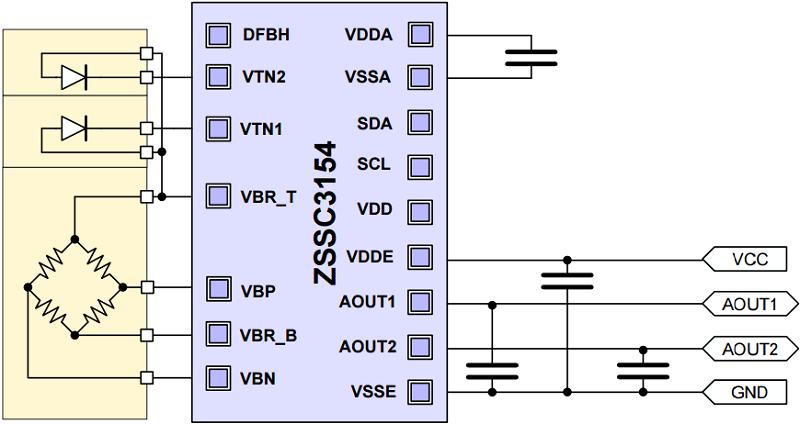
The ZSSC3154 is an integrated circuit for highly accurate amplification and sensor-specific correction of a bridge sensor signal. Up to two temperature sensors can also be read in parallel. The circuitry provides different configurations of the analog outputs to show two measurement results simultaneously. This also allows generating a complementary bridge sensor signal, which is often required in safety-relevant applications. The ZSSC3154 can take readings from two external temperature sensors to compensate the temperature drift of the bridge sensor signal and to output a separate temperature signal. An internal calibration microcontroller in addition with an on-chip EEPROM performs the digital compensation of the sensor offset, the sensitivity, the temperature drift, and the nonlinearity. The one-pass digital end-of-line calibration plus the integrated broken chip-detection supports automatic and highly efficient mass production.